Tuesday, February 16, 2016

Marine Mammals on the Lost Coast

While out exploring the Lost Coast Trail there is a good chance you’ll come across seals and sea lions on the beach. Most likely these will be harbor seals, Stellar sea lions, or in one area there may also be northern elephant seals.

The presence of elephant seals here is new and if the few pups born this winter wean this spring, this will be the farthest northern breeding colony that has been established! This is exciting as being able to witness the creation of a new elephant seal colony is a rare opportunity.

Photo by Jesse Irwin


In part, the elephant seals are here because of the remote and undisturbed nature of the lost coast. This is a great example of the importance of wilderness areas.  They are a welcoming place for wild animals – a place where they can go and not be harassed and disturbed by the constant presence of humans and all of our developments, machines, and noise. This is wild nature at its finest and I’m proud that we have set aside such places where the plants and animals are free to roam and proliferate without the ever present manipulation of mankind.  What better areas to observe the undisturbed natural functions of the world?

The Wilderness Act of 1964 states:

“A wilderness, in contrast with those areas where man and his own works dominate the landscape, is hereby recognized as an area where the earth and its community of life are untrammeled by man, where man himself is a visitor who does not remain.”

You can help the marine mammals of the Lost Coast by keeping at least 50 meters from the animals. They may seem slow and sluggish at first glance but if they’re disturbed or agitated they can move very fast in a very short amount of time. It won’t be any problem to crush you with their 1,500 – 4,500 pounds of weight.   Staying at least 150 Feet (about 50 paces) from the animals will help keep you safe as well as treat them with the respect and undisturbed habitat they deserve.  These guidelines are mandated by the Marine Mammal Protection Act – a federal law that has helped many marine mammal species recover.  So, please help us maintain this peaceful and safe place, not only for elephant seals, but for all of the marine mammal visitors to our coast.

In addition, please be very mindful of your dogs – which are required to be on a leash or under voice control at all times. Dogs are probably one of the largest threats to the disturbance and physical harm to the seals and sea lions of the Lost Coast.

Please note that seals and sea lions can go for long periods without breathing or moving while on land!  Please enjoy them from a safe distance (150 feet).  If, however you notice a sick or injured marine mammal that you think needs attention you can report it to the North Coast Marine Mammal Center  at 707-951-4722.  If the animal is dead, please call the HSU Marine Mammal Stranding Hotline at 707-826-3650.   

Thank you!


Thursday, January 28, 2016

A Message to The Surfing Community

The Lost Coast, and the surfing opportunities here, are no longer secrets. Overnight visitation to the King Range Wilderness has doubled in the past 3 years. There are more and more of us discovering this amazing and beautiful landscape and it will take all of us to help keep it as pristine as it should be.

This time of year, when people head out here to ride the waves and camp out on the coast I find A LOT of abandoned property. Tents, tarps, household pots and pans, sleeping bags, food items, etc. 

It's always the same type of gear that folks leave behind: cheap and heavy. They haul it out here and then decide that it's too heavy to hike back with them. To justify leaving their junk behind they say that they are either going to come back for it and/or leaving it for others to use. 


The truth is this: You can justify it however you want but abandoned property is the result of laziness. 

Over the past 7 years we've removed enough abandoned gear (all from the surf spot) to fill a dumpster. 

Inside of the tent (pictured above) there was a note that read, "for the next campers that need it." 

Are the five empty food cans that were scattered around the site also for the next campers that need them? It all looks like a bunch of garbage to me that someone was too inconsiderate to pack out. 

Too common: Multiple pots, heavy tent, huge tarp, and a large, cheap stove designed for car camping were left behind (along with several empty fuel canisters) - most notably from surfers 

Several Large tarps, household pots, empty booze bottles, surfboard bag, broken tent poles

NOW, all this being said, I've met a lot of really awesome people in the surfing community who care about their public lands, keeping things clean for other visitors, and who have actually helped me clean fire rings and collect garbage. 

One of these people I've met that really stands out in my mind is Aleks, the owner of Aqua Surf Shop in San Francisco. He's all about spreading the message on keeping the place clean and has helped me pack out other people's trash. 

This is everyone's space. Let's keep things wild, natural and pristine so we can all enjoy this place now and for generations to come. 


Wednesday, January 27, 2016

Winter Travels: Safety First

I’ve either witnessed or heard of all of the below scenarios happening to people.

1. You’re hiking along the Lost Coast Trail in light rains and the streams are high but still passable. On Day one of your hike heavy rains set in and persist through the night. On day two you realize that you’re unable to go north or south because the creeks are impassable. This adds an extra day to your journey that you didn’t plan for as you wait for the streams to lower. 
2. The creek is pretty high but you decide to attempt the crossing. Half way across you slip and are soaked head to toe – along with most of your gear.
3. A wave with intense energy races much farther up the beach than you expect and you jump up onto a small rock ledge at the last moment and cling on to whatever you can grab. The wave hits and knocks your feet off the rock but you’re still holding on. You get banged up against the rocks pretty badly. You’re now soaked and have a badly injured knee.
4. You’re crossing a creek when a large wave surges up the beach and into the creek - You’re knocked down and get tumbled around between the two forces of water. You get a good dose of reality as you're now soaked and scraped on your arms and legs badly. 

5. Gale force gusts of wind tear the rain-fly off of your tent, leaving you out in the rain and forcing you to hike out in the night - if tides permit - miserable, wet and dangerously cold. 
--------------------------------------------------------------------------------------------------------------------------


Several weeks ago we received a call from a concerned mother  - her daughter was out on the Lost Coast Trail, solo, and was somewhere on the beach apparently trapped from the cliffs and the ocean. The hiker had a satellite phone with her that she was using to make frantic calls to her mother. Thankfully, she eventually made it out of the impassible zone and to the safety of Randall Creek area. By this time it was well after sundown and she was wet and cold from the ocean. She had already made the wise decision to remove her wet clothing and get into her sleeping bag. To further help prevent hypothermia, I advised her to eat any available food she had and to heat water for a warm drink; she could also fill her water bottle with the hot water and keep it in her sleeping bag with her.

The young lady was unnerved and worried about how and if she should continue with her journey.
She had come a long way for this trip and had been planning and looking forward to it for a long time – although she was shaken up from the day’s events, she didn’t want to quit.

I admire the perseverance and courage. However, I encouraged her to head back the way she came – to the Mattole Trailhead. My reason being that 1. The conditions were not conducive to traveling on the coast that week due to higher than average tides and large ocean swells. 2. She already knows what to expect if she were to go back the way she came 3. The section of trail south of Miller Flat, especially near Shipman Creek, can be very hazardous to travel 4. She is traveling alone, which is even more dangerous for a novice backpacker.

Understandably, she was concerned about how she would get back to her vehicle if she turned around (she parked at Black Sands Beach Trailhead where took a shuttle up to Mattole). I reminded her that she had a satellite phone and I encouraged her to call the shuttle company as soon as possible to explain the situation. She was also very concerned about not “completing” the trail.

It’s this tunnel vision that people sometimes get into  - adventurers of all sorts - that lead them down the path of no return.

The most important goal of any journey is getting home safely – nothing is more important than that. Don’t think of a trip as a failure just because you didn’t complete the trail – rethink what your goals of the trip are and what benefits and experiences you hope to come home with. There are no rules that say you can’t redesign those goals as you go.

Flexibility is key. See the problems and think of solutions – don’t just trudge on through the hazards just because you made up your mind long ago that that is what you were going to do or because you have to keep to a schedule. What’s more important: getting home a day late or getting home in one piece and alive?

Have a backup plan. 
What if you get to a creek and it's too high to cross?
What if everything in your pack gets wet? 
Plan for the worst case scenario and do the necessary preparation to avoid getting yourself in those situations to begin with. 

For more about the specifics of traveling in the King Range, and the Lost Coast Trail, during the winter:

First, read this blog post for lots of information about how to travel through the "impassable at high tide" sections and a real story about a group backpacking on the Lost Coast who ran into serious trouble (learn from their mistakes!)


Second, be sure to read Winter Conditions: Plan for the worst, hope for the best for specific information about planning a trip in the King Range during the winter. Also check this post - scroll about half way down for more tips on winter travel in the King Range


The creeks are deep and difficult to cross.
The waves can be huge and make passage on the narrow sections of coast very hazardous. 
Conditions change rapidly on the Lost Coast. 

Look up, look around and pay attention! 

Get yourself out of the situations you put yourself into! 

Send me a message or give me a call with any questions. 

Your Wilderness Ranger,
Paul
lostcoastranger@gmail.com
707-986-5405

p.s. It's best to give me at least a week to get back to you. 

Wednesday, October 28, 2015

Thanks to Volunteers, Campfire Restrictions Lifted and Other News

Thank You to the King Range Wilderness Ranger Volunteers who dedicated their summer here in the King Range. They spent lots of time and energy helping to keep your wilderness clean for your enjoyment and to preserve its wilderness character. Below are a few stats of what we accomplished out there this year:


We turned fire rings like this
Into this, 275 times

We made 123 toilet paper piles disappear and buried 55 exposed turds (ET)

Toilet paper and ETBs continue to be an issue. Please read this blog post regarding human waste disposal.

The bottom line is that we ask you to completely BURY your waste, including your toilet paper. Even better is to pack out your toilet paper - carry a zip-lock bag with you specifically for this purpose. I’ve seen folks cover the zip lock with duct tape which seems to be an effective way to keep the gross factor down.  

We removed 172.5 pounds of trash left behind from visitors. The above picture is the trash hiked out of Big and Miller Flats last week. 

Removed 488.5 pounds of Trash originating from the ocean.

Removing fallen trees from Rattlesnake Ridge Trail

Dismantling a driftwood shelter


Many hundreds, and possibly thousands of people will be camping at the same places that you camp after you leave them behind. Which would you rather come to at the end of a day of backpacking on the Lost Coast:

Campsite 1: A clean site with a small, well contained fire ring and no trash.

Campsite 2: You see wrappers and cans littered throughout the site; Large fire ring that is spilling out ash, rocks and half burnt logs;  Several wads of toilet paper poking out of the soil and from underneath rocks just feet from where you set up your tent.

Overnight visitation to the King Range Wilderness has doubled in the past 3 years. There are more and more of us discovering this amazing and beautiful landscape and it will take all of us to help keep it as pristine as it should be. 
------------------------------------------------------------------------------------------------------------------------- 

I’d also like to thank the American Conservation Experience trail crew who spent several months maintaining the trails in the King Range. They spent most of their time cutting back the encroaching vegetation:

Saddle Mountain Trailhead to about half way down Buck Creek Trail

Most of the King Crest Trail between Saddle Mountain Trailhead and the Rattlesnake Ridge Trail junction.  

They worked their tails off out there while the majority of the time in sweltering heat. This is slow, hard and grimy work. From their efforts now you can enjoy waking on these trails without having to swim your way through the bushes. If you ever see a trail worker during your journeys be sure to thank them for what they do. 

The Crew

Lopping on the King Crest Trail

Before 1a. 

After 1b.

Before 2a

After 2b

Before 3a

After 3b

--------------------------------------------------------------------------------------------------------------------------

Other News

The King Range National Conservation Area has lifted the restrictions on campfires. If you do decide to have a campfire please enjoy it responsibly.


1. Use fire rings that already exist before building anything new

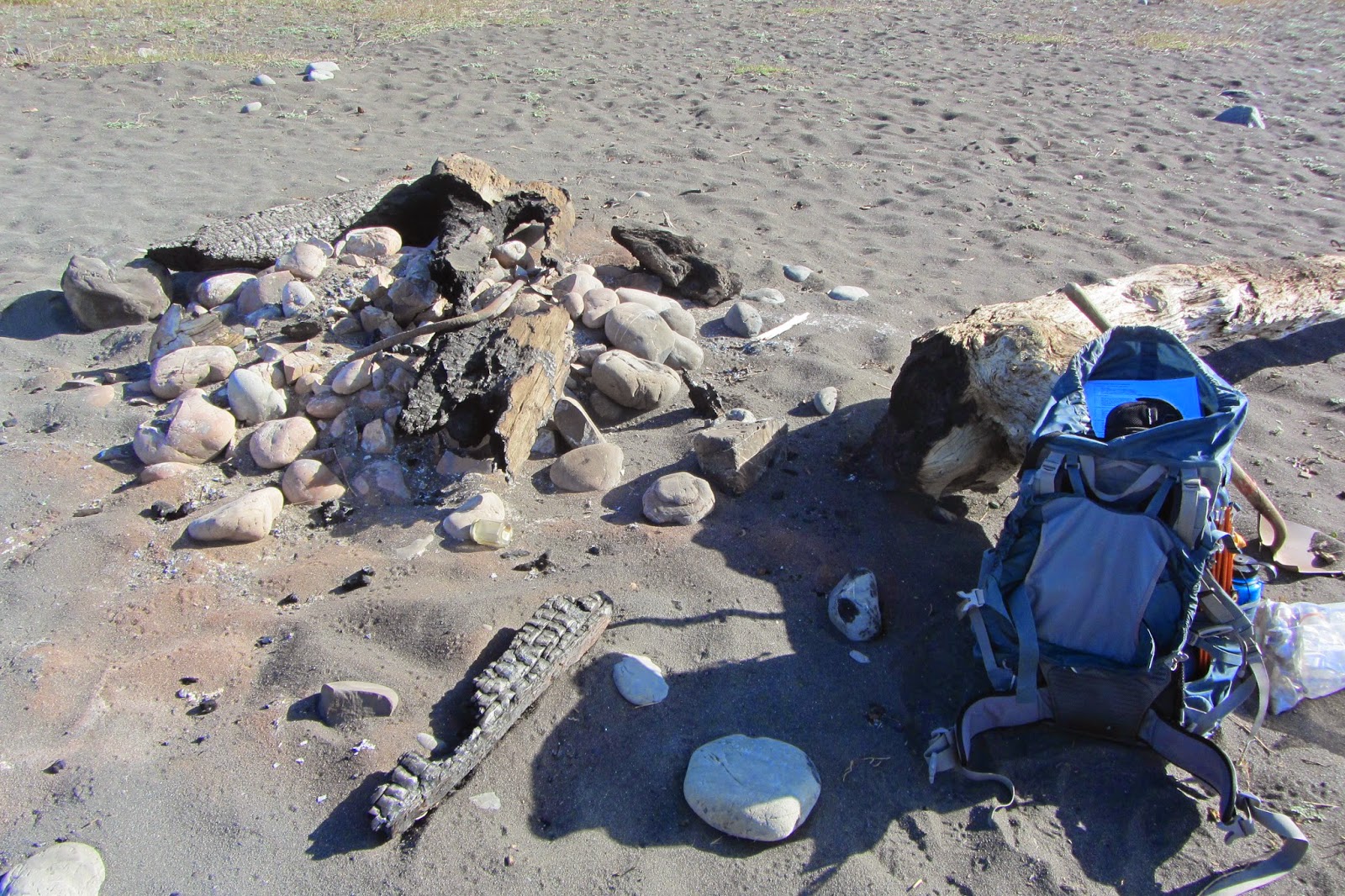
2. Burn only dead and downed wood that you can easily break by hand and that fits into the fire ring. Burning large diameter/lengthy pieces of wood breaks down the fire ring and spreads rocks and ash all over the site.

Below are examples of fire rings that broke down due to the burning of wood that is too large.


Unsightly, isn't it? 


3. Foils and cans do not burn. Only put items into the fire that will completely burn in one sitting and pack out all other trash.

Fire rings are not trashcans

Fire rings are not trashcans 

The wilderness is not a trash can. Please pack out your garbage. 


4. Extinguish your campfire with abundant water and stir with a stick. Please do not put the fire out with sand – this fills the ring and makes it unusable for other visitors, which prompts them to build a new fire ring, multiplying the impacts. 

5. Gargantuan fire rings are a tremendous eye sore. If the fire isn’t warm enough for you – GET CLOSER to the fire.

Below are examples of gargantuan fire rings. These fire rings are unnecessary and take a lot of effort to rehabilitate.


Lastly, this is what a fire ring should look like: 

Small and clean - Please help us keep them this way

--------------------------------------------------------------------------------------------------------------------------
I was at out on the coast not too long ago and came across these items at one of the campsites:

A 4-person tent, Surf board wax and 5 empty food cans. 

This time of year, when people head out here to ride the waves and camp out on the coast I find A LOT of abandoned property. Tents, tarps, household pots and pans, sleeping bags, food items, etc. 

It's always the same type of gear that folks leave behind: cheap and heavy. They haul it out here and then decide that it's too heavy to hike back with them. To justify leaving their junk behind they say that they are either a) going to come back for it and/or b) leaving it for others to use. 

The truth is this: abandoned property is the result of laziness. 

Over the past 7 years we've removed enough abandoned gear (all from the surf spot) to fill a dumpster. 

Inside of the tent (pictured above) there was a note that read, "for the next campers that need it." 

Are the five empty food cans that were scattered around the site also for the next campers that need them? It all looks like a bunch of garbage to me that someone was too inconsiderate to pack out. 

--------------------------------------------------------------------------------------------------------------------------Now, that's the end of my rant. Let's end on a positive note. 

The second plein air painting event recently took place in Shelter Cove. 
Peter McNeill won the "Kings Choice" award for best capturing the life, spirit, natural and cultural qualities of the King Range. 

As always, if you have any questions give me a call or send me an e-mail (give me at least a few days to get back to you)

Your Wilderness Ranger
Paul Sever
707-986-5405
lostcoastranger@gmail.com

PS, back in March a journalist went out hiking with me and he wrote up this great article about what I do out here - in case you haven't read enough already you should check it out. 


Tuesday, July 21, 2015

Status of Springs and Streams

Many of you may be interested in hiking in the "upland" trails in the King Range (King Crest Trail, Cooskie Creek Trail, Rattlesnake Ridge, etc).

What you need to know is that there are limited water sources once you leave the beach on the Lost Coast Trail. With the drought, many of the upland water sources are at a lower flow compared to what they would normally be at this time of year.

Maple Camp: (above) low flow; dry along some stretches of stream bed; shallow pools

Miller Camp: Water difficult to find. When you get to the bottom of the switchbacks, head west for a few minutes and you should be able to find some small pools of water among the rocks. 

Bonus Spring (on the Miller Camp loop): DRY


Nick's Camp: (above) Abundant; you should have no problem finding water in this small stream


Bear Hollow Spring: (above) Slow trickle; small pool of water ~ 3" deep.

Telegraph Spring: 10/11/2015: Flowing @ 10 min/Liter 

More information as it comes in but that's the info as of now. Be sure to bring plenty of water if you are hiking on the upland trails - it's hot up there.